Fire Resistance in Steel Framed Structures
Updated: May 17
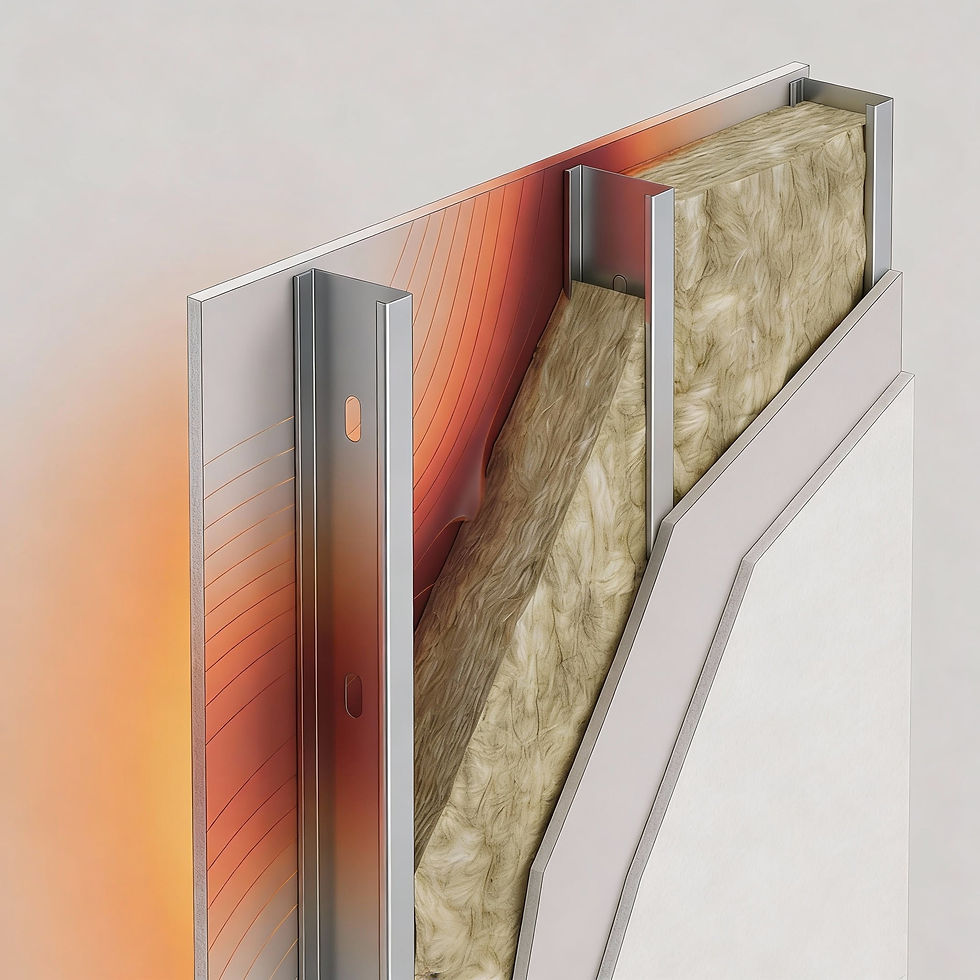
Steel-framed structures are renowned for their intrinsic fire resistance, with untreated steel typically offering up to 15 minutes of protection against fire. For extended durations—such as 30, 60, or 120 minutes—passive fire protection systems are commonly employed. These systems insulate the steel from high temperatures using specialized materials like intumescent coatings, boards, or spray applications.
Performance of Steel in Fire Conditions:
Strength Reduction:
Steel's ability to bear loads diminishes as temperatures rise. Significant strength reduction begins around 400°C, and at approximately 550°C, steel may lose up to half its design strength.
Thermal Expansion and Buckling:
Heat causes steel to expand, which can lead to buckling or structural instability.
Non-combustibility:
Steel does not ignite or contribute to the overall fire load, making it a stable material under fire conditions.
Techniques for Fire Protection:
Passive Fire Protection:
Methods in this category create a physical barrier between fire and steel, diminishing heat transfer.
Common options include:
Intumescent Coatings that expand upon exposure to heat, forming a protective insulating layer.
Boards and Sprays that act as non-reactive barriers, shielding the steel from flame and heat.
Active Fire Protection:
Systems such as sprinklers actively fight fire rather than just offering insulation or containment.
Ensuring the Desired Level of Fire Resistance:
Section Factor:
A critical determinant is the ratio of heated perimeter to the steel member’s cross-sectional area (Am/A). Heavier sections with lower ratios heat up more slowly, inherently improving fire resistance.
Building Codes:
Regulations specify minimum fire resistance durations based on parameters like building height, occupancy type, and compartment dimensions.
Design Approaches:
The appropriate selection and application of fire protection measures are vital for achieving specified fire resistance periods.
Real-Life Applications in Steel Structures:
Unprotected Steel:
In low-fire-risk scenarios such as open-sided car parks or minimally loaded frameworks, untreated steel may suffice without additional protection.
Light Steel Framing:
With proper internal linings, light steel frames can achieve fire resistance for up to 120 minutes, meeting stringent safety requirements.
Large Structures:
For high-rise buildings, apartment complexes, and other extensive constructions, thorough planning and execution of fire protection strategies ensure structural stability throughout potential fire events.


