Insulation for Exterior Walls in Canada
Insulating exterior walls in Canada requires a thoughtful approach to balance performance, cost-effectiveness, and durability. A combination of spray foam insulation and batts, such as mineral wool or fiberglass, is often highly recommended. Rigid foam boards also serve as an excellent choice, particularly for foundations and exterior walls, thanks to their superior moisture resistance.
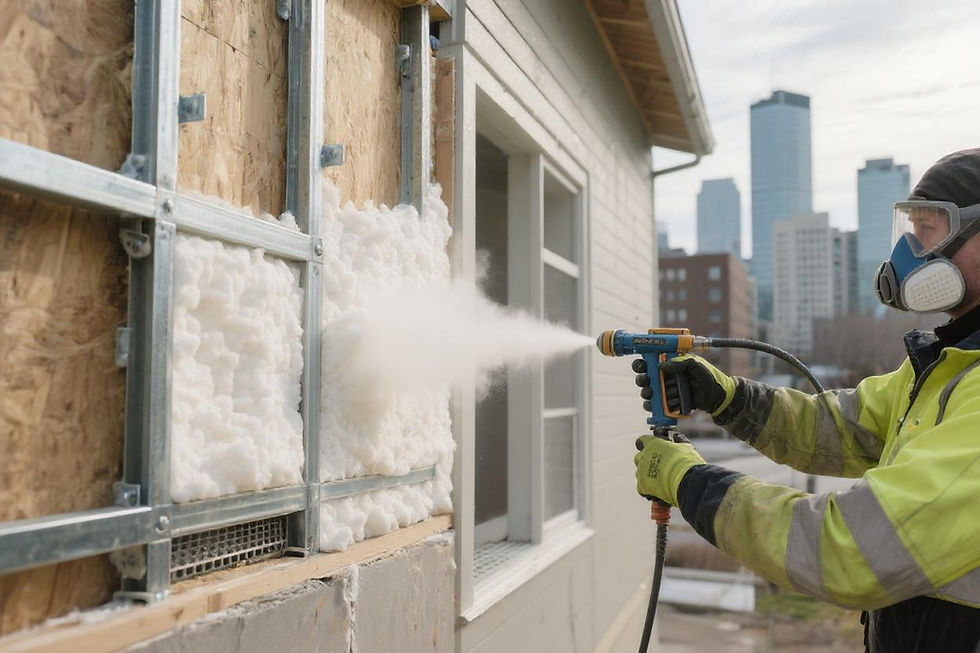
Here’s a more detailed overview of the available options:
1. Spray Foam Insulation
- Open-cell spray foam: Provides good thermal resistance and works well within wall cavities.
- Closed-cell spray foam: Offers a higher R-value and doubles as a vapor barrier, reducing air leakage and moisture-related issues.
- Advantages: Delivers an airtight seal, minimizes energy loss, and resists moisture damage. Applicable to various types of walls.
- Disadvantages: Requires professional installation and is generally more costly compared to other insulation types.
2. Batts Insulation
- Mineral Wool: Features exceptional fire resistance and works effectively in areas with fire safety concerns.
- Fiberglass: Cost-efficient but often necessitates additional measures for moisture protection.
- Advantages: Simple installation and affordability make this a popular choice.
- Disadvantages: Provides limited air sealing properties and may develop moisture issues if not properly installed.
3. Rigid Foam Board Insulation
- Commonly extruded polystyrene (XPS), rigid boards exhibit high thermal performance and moisture resistance, making them ideal for exterior applications and foundation walls.
- Advantages: Enhanced resilience against cold climates and moisture buildup.
- Disadvantages: Tends to be pricier compared to batt insulation options.
4. Other Considerations
- Cellulose Insulation: Made from recycled materials, this eco-friendly choice offers commendable thermal performance.
- Loose-fill Insulation: Perfect for retrofitting older structures as it can be blown directly into wall cavities.
Factors to Assess When Choosing Insulation:
- Climate: Homes in colder regions require insulation with a higher R-value for improved energy efficiency.
- Budget: Costs vary significantly across insulation types, requiring careful financial planning.
- Performance Needs: Include considerations for moisture or fire resistance, ease of installation, and long-term benefits.
- Installation Requirements: Some options, like spray foam, demand professional expertise.
Recommendation:
For the majority of Canadian homes, combining spray foam insulation with batts or using rigid foam boards proves to be an effective solution for balancing performance and expenses. Consulting an experienced insulation professional ensures the best results tailored to your home’s specific needs and budget considerations.


