Types of Roof Trusses in Cold-Formed Steel Framing
Cold-formed steel (CFS) trusses utilize classic truss designs such as Pratt, Warren, Fink, and King/Queen Post. These popular configurations are complemented by specialized truss types tailored for distinct architectural or functional needs. Examples include Scissor trusses for vaulted ceilings, Attic trusses for creating habitable roof spaces, and North Light trusses optimized for natural lighting. Constructed from C-shaped or similar steel sections, CFS trusses are connected using screws or bolts. Depending on the orientation of the structural members, they can be designed as major-axis or minor-axis trusses to achieve specific strength and support goals.
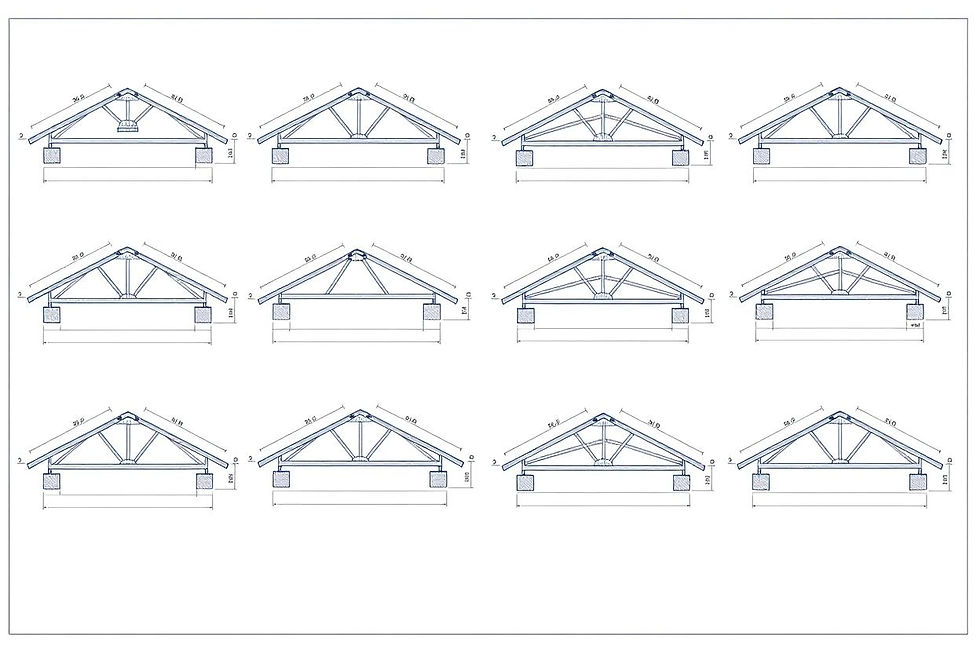
Common Truss Types
Pratt Trusses:
These feature vertical members under compression paired with diagonal members under tension, offering efficient load management and versatility for various spans and loads.
Warren Trusses:
Characterized by alternating diagonal members forming equilateral triangles, Warren trusses stand out for their simplicity and material efficiency, making them ideal for extended spans.
Fink Trusses:
A widely used option for shorter spans, Fink trusses feature a distinctive webbing pattern suited to standard applications.
King Post Trusses:
Simple by design, King Post trusses are commonly used in smaller buildings and feature a single vertical post at their center.
Queen Post Trusses:
Similar to King Post designs but with two vertical posts, Queen Post trusses are better suited to small-to-medium-sized buildings.
Scissor Trusses:
With intersecting bottom chords, these trusses create a vaulted or cathedral ceiling effect, enhancing aesthetic appeal while enabling unique roof shapes.
Attic Trusses:
Specially designed to maximize usable space within the roof structure, these trusses include provisions for forming attic rooms.
North Light Trusses:
Incorporating a short vertical section and a long sloping section, North Light trusses serve as an efficient solution for industrial buildings seeking optimal north-facing natural light.
Configuration Types
Major-Axis Trusses:
Top and bottom chords are aligned along the major (strong) axis of the CFS section profile, ensuring enhanced structural strength.
Minor-Axis Trusses:
Here, the chords follow the minor (weak) axis of the section profile, serving applications that require less intensive support.
Back-to-Back Trusses:
This configuration involves fastening two standard C-sections back-to-back to form durable chords and webs without the need for gusset plates.
Inline Trusses:
A single C-section serves as the chord member in this streamlined truss configuration.
Assembly & Construction
Materials:
CFS trusses are constructed from standard C-shaped steel members or proprietary section designs tailored to specific requirements.
Connections:
Structural elements are secured with screws, bolts, or other fasteners, with back-to-back configurations often eliminating the need for additional gusset plates.
Fabrication:
Truss fabrication is typically pre-engineered using advanced software to accommodate precise roof shapes and design layouts.


