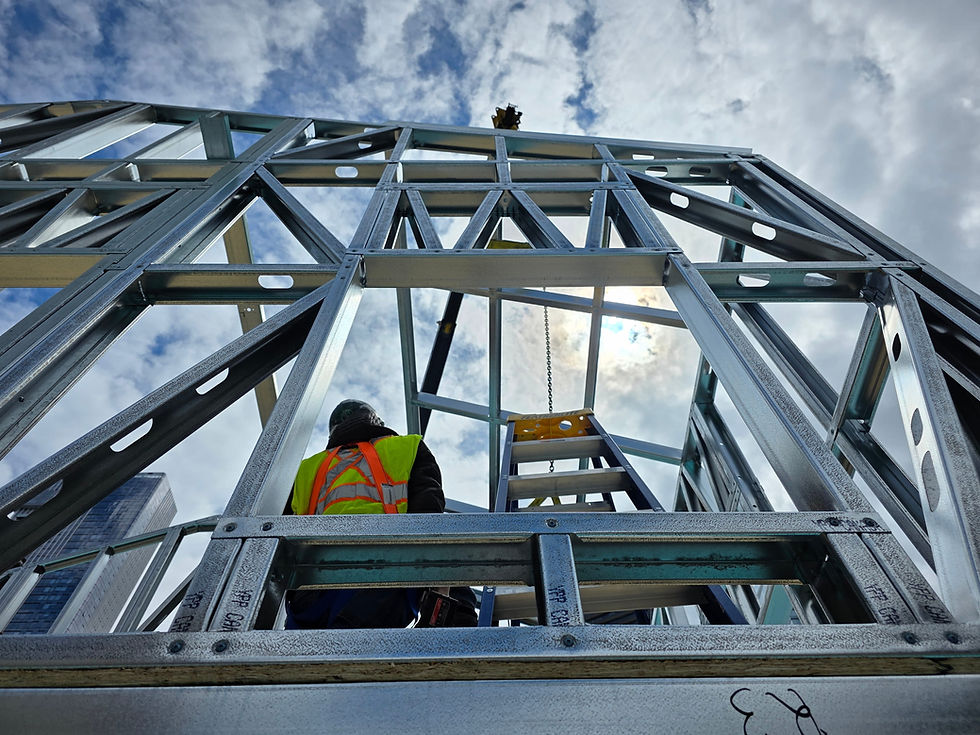
Is FRAMECAD Software Trustworthy for Cold-Formed Steel (CFS) Design in Canada?
Updated: May 17
Cold-formed steel (CFS) framing is increasingly popular in Canada due to its durability, precision, and suitability for off-site construction. As adoption grows, many engineers and designers ask an important question:
Can FRAMECAD software be trusted for CFS design in the Canadian context?
The short answer is yes — FRAMECAD is generally considered a reliable and industry-accepted tool for CFS design and detailing, provided it is used correctly and with appropriate engineering oversight. Below is a closer look at why.

Why FRAMECAD Is Considered a Reliable CFS Design Tool
1. Purpose-Built for Cold-Formed Steel
FRAMECAD Structure is specifically developed for cold-formed steel framing. Unlike general structural software, it is tailored to the behavior, limitations, and design requirements of CFS members. The software performs real-time structural analysis, including load checks, member capacity verification, and serviceability assessments as the model is developed. This specialization is a key reason why many professionals trust it for light-gauge steel projects.
2. Support for Canadian Codes and Standards
For Canadian projects, code compliance is critical. FRAMECAD supports Canadian design standards, including CSA-based requirements, allowing engineers to align designs with applicable building codes and provincial regulations.
This makes FRAMECAD suitable for use across Canada, from residential and mid-rise buildings to modular and panelized construction, as long as code settings are configured correctly.
3. Proven Industry Use
FRAMECAD is used by:
Structural engineers
Design-build contractors
Off-site and modular manufacturers
Light-gauge steel fabricators
Its use in real-world projects — including in North America — demonstrates that it is not experimental software, but rather a mature platform with a long-standing industry presence.
4. Integrated Design-to-Manufacturing Workflow
One of FRAMECAD’s strongest advantages is its integrated workflow. The software connects:
Structural design
Framing layout and detailing
Shop drawings and reporting
Manufacturing data (where applicable)
This reduces errors that often occur when transferring data between multiple programs and improves consistency from engineering through fabrication — a major benefit for Canadian off-site construction projects.
5. Ongoing Development and Technical Support
FRAMECAD continues to be actively developed, with regular updates and technical support. Access to training resources, documentation, and professional assistance adds to the software’s credibility and long-term reliability.
Important Considerations for Canadian Engineers
While FRAMECAD is a powerful tool, it should be used with the same care as any structural engineering software:
Not a replacement for engineering judgment
FRAMECAD does not eliminate the need for professional review. In Canada, designs must still be checked and stamped by a licensed Professional Engineer (P.Eng.), where required.
Accuracy depends on inputs
Load assumptions, member selections, connection detailing, and boundary conditions must accurately reflect the project. The software can only evaluate what it is given.
Independent verification is good practice
For critical elements or complex conditions, many engineers validate FRAMECAD results using hand checks or alternative analysis methods.
Final Thoughts
FRAMECAD software is a trustworthy and industry-recognized solution for cold-formed steel design in Canada, particularly for projects involving light-gauge steel framing, modular construction, and panelized systems.
When used correctly — and combined with sound engineering judgment and code knowledge — FRAMECAD can be a reliable part of a professional CFS design workflow. Like all engineering tools, its value lies not just in the software itself, but in the expertise of the people using it.